
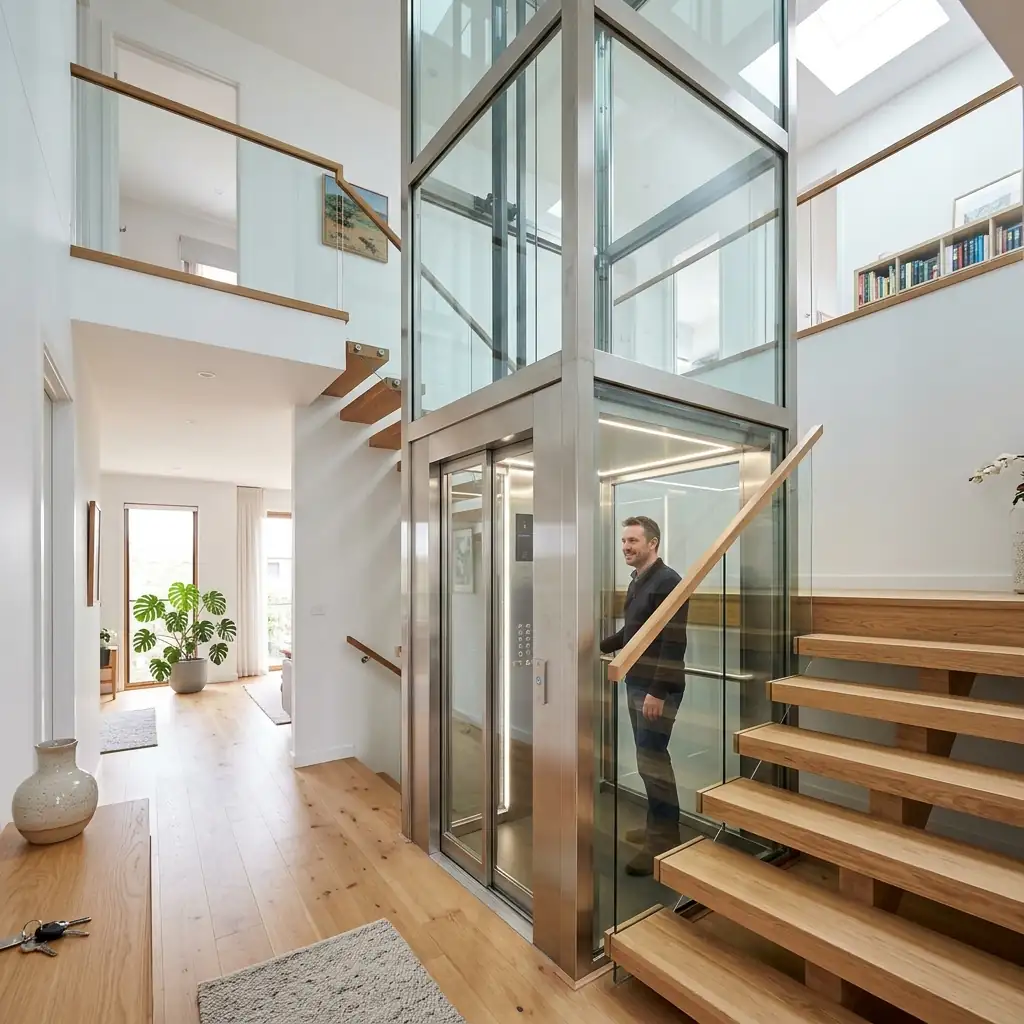
Introduction: The Evolution of the Residential Home Lift
For decades, the concept of a residential elevator or home lift was viewed almost exclusively through two narrow lenses: extreme luxury for sprawling mansions, or clinical accessibility retrofits for individuals with severe mobility challenges. Today, that paradigm has completely shifted. Home lifts have transitioned from high-end novelties to essential, highly desirable architectural elements in modern multi-storey homes across Australia. If you are still deciding between a home lift and a stairlift, our detailed stairlift vs home lift comparison will help you choose the right solution.
This transformation has been driven by several convergent factors: an aging population wishing to "age in place", the increasing density of urban land requiring vertical home designs (such as narrow three-storey townhouses), advancements in engineering that eliminate the need for massive machine rooms, and a growing appreciation for the resale value a lift adds to a property. Installing a home lift is a significant financial and structural commitment. A new buyer faces a complex web of technical specifications, building regulations, aesthetic choices, and cost variables.
This comprehensive guide is designed to demystify every stage of the process, from selecting the right drive technology to navigating local council regulations, budgeting for hidden building costs, and choosing safety features that protect your family. Whether you are building a new multi-level home or retrofitting a lift into an existing structure - a topic we explore in detail in our guide to installing a home lift in an existing house - this guide will serve as your ultimate reference.
Key Takeaways
- Drive Technology Dictates Everything: The choice between hydraulic, traction, pneumatic, or screw-driven lifts affects your space requirements, ride quality, energy bills, and maintenance schedules.
- Budgeting Must Go Beyond the Unit: The retail price of the lift is only half the cost; structural engineering, shaft construction, electrical upgrades, and ongoing council certifications make up the rest. Explore government grants and subsidies that may help offset the cost.
- Compliance is Critical: Australian Standards (AS 1735) and local building regulations are strict. For residential properties, this ensures critical features are present, such as dedicated emergency communication systems, backup power, obstruction sensors, and adequate clear door widths.
- Future-Proofing is Cheap, Retrofitting is Expensive: Designing a "lift-ready" shaft/void during initial construction or renovation costs very little but saves tens of thousands of dollars if you decide to install a lift later.
- Understand the Maintenance Lifecycle: Like cars, lifts require regular professional servicing (typically 1–2 times a year) to guarantee mechanical safety and prolong components.
Key Considerations When Purchasing a Home Lift
Are you looking for a mobility solution for your home but not sure where to start? Selecting the perfect residential lift requires a balanced understanding of technical capability, spatial constraints, and human needs. Here are the primary areas you must consider before selecting a lift model or signing a construction agreement:
1. Placement and Space Requirements
Where will the lift be installed? Placement is one of the most critical decisions in the design phase. You need to consider the available space on each floor, the total travel distance required, and how the lift will integrate with your home's layout. Identifying the right location ensures functionality and a seamless fit.
You can choose between internal and external lift towers. Internal lifts are often positioned in the well of a winding staircase, inside a retrofitted stack of closets, or as a free-standing feature in a central hallway. External lifts are built outside the home's facade and connect to the interior via newly cut doorways. While external lifts save valuable indoor square footage, they require weatherproofing, exterior foundation work, and council planning approvals.
2. Your Personal and Practical Needs
Do you require a wheelchair-accessible lift? Will you need seating inside? Should the lift accommodate people, cargo, or both? Assessing your specific needs will help you choose the best lift to suit your lifestyle.
If you are installing the lift to help with an existing mobility impairment or to accommodate a wheelchair, cabin size and entry widths are paramount. A wheelchair-accessible lift requires a minimum clear floor space (often 830mm x 1100mm) and sliding or automatic doors rather than manual swing doors. On the other hand, if the lift is simply to make carrying groceries, luggage, or laundry easier between floors, a more compact, non-compliant platform or cabin may suffice.
3. Safety Features & Standards
Ensure the lift meets or exceeds all Australian safety standards. Features such as emergency stop buttons, backup power, and secure doors contribute to a safe experience. Never compromise on safety systems, and always ensure the lift is installed by qualified professionals.
4. Ongoing Maintenance and Servicing
Regular maintenance is essential to keep your lift operating safely and efficiently. Some models have strict servicing requirements, so be sure to factor in maintenance costs and schedules before making a purchase. Neglecting service intervals can void warranties and create safety risks.
5. Drive System Options
There are various drive systems available, each with different benefits. Understanding the differences between hydraulic, traction, and other mechanisms will help you select the most suitable drive system for your needs.
6. Choosing the Right Lift Provider
Selecting a reputable lift dealer is just as important as choosing the lift itself. Research different providers, compare options, and work with a company that offers reliable products, professional installation, and comprehensive ongoing support. A quality provider will guide you through site assessment, engineering sign-offs, and state council registration.
Drive Technologies & Mechanisms
The mechanical drive system you select determines how the lift travels, how much building work is required, how smooth the ride feels, and how much noise it generates.
1. Hydraulic Drive Systems
Hydraulic home lifts use a piston-driven system powered by pressurised oil to raise and lower the cabin. When the lift ascends, the pump pushes hydraulic oil into the cylinder, forcing the piston upward and elevating the cabin. For descent, a valve slowly releases the fluid back into the reservoir using gravity, meaning the lift draws very little power when travelling downward.
Hydraulic lifts offer an incredibly smooth, quiet, and solid ride. Because the cabin is supported by hydraulic pressure, there is minimal sway or vibration.
They typically require a separate machine room or cabinet (often located under a staircase or in a garage) to house the hydraulic pump, fluid tank, and controller. They also require a pit at the bottom of the shaft (usually 100mm to 300mm deep) and structural walls capable of supporting the guide rails and piston assembly.
2. Traction (Cable & Belt) Systems
Traction lifts are the residential equivalent of the elevators found in commercial high-rises. They use a system of cables or steel-reinforced polyurethane belts wound around a sheave (pulley) connected to an electric motor. A counterweight is suspended on the opposite end of the cables to offset the weight of the cabin, making the motor's job highly efficient.
Modern residential traction lifts are typically "Machine-Room-Less" (MRL). The motor and controller are located directly inside the shaft (usually at the top), eliminating the need for a separate equipment room.
Traction lifts are fast, smooth, and highly responsive. Ride quality depends heavily on the precision of the installation and rail alignment. High-quality models use variable frequency (VF) drives to provide smooth acceleration and deceleration, preventing any "jerky" starts or stops.
MRL traction lifts are highly space-efficient. They require a shaft and a pit (usually 100mm to 200mm), but no machine room. However, they do require additional headroom (overhead space) at the top floor to accommodate the motor assembly.
3. Pneumatic (Vacuum) Systems
Pneumatic lifts operate using air pressure differentials. The cabin travels inside a sealed, transparent acrylic or polycarbonate cylinder. A turbine assembly at the top of the shaft sucks air out of the chamber above the cabin, creating a vacuum that pulls the cabin upward. To go down, control valves slowly let air back into the upper chamber, utilizing gravity for a smooth descent.
The ride is smooth but can feel unique. The cabin is typically surrounded by panoramic glass or acrylic, offering 360-degree views as you travel.
Extremely minimal. Pneumatic lifts are self-supporting and do not require a built shaft or pit; they can sit directly on the floor. The cylinder has a small footprint, making it perfect for fitting in the well of a winding staircase or in the corner of a room.
4. Screw and Nut Drive Systems
Screw-driven lifts operate on a remarkably simple mechanical principle. A large threaded steel screw runs the full height of the shaft. A drive nut, attached to the lift platform or cabin, is driven by an electric motor. As the motor turns the nut, it crawls up or down the screw thread, moving the lift.
Highly reliable and safe, with comparable travel speeds to other drive systems. A key advantage is that screw-drive lifts are generally quieter running than most other types, making them an excellent choice for noise-sensitive households.
These lifts are incredibly compact and often come with their own prefabricated shaft panels. They require little to no pit (often just 50mm) and minimal headroom, making them popular for retrofits where space is at a premium.
The Benefits of Installing a Home Lift
Deciding whether to install a lift in your home is a big decision, and we understand there's a lot to consider. Beyond simple luxury, here are the key benefits that may help you make an informed choice:
1. Increase Property Value & Appeal
A home lift is a valuable addition that enhances your property's appeal and marketability. Many homebuyers appreciate the convenience and luxury a lift provides, making it a wise investment that can boost resale value. As density increases and more multi-storey townhouses are built, homes with pre-installed lifts or lift voids attract a premium in the Australian real estate market, especially among affluent downsizers.
2. Enhanced Accessibility
Navigating stairs can become a challenge due to aging, injury, or mobility restrictions. A home lift provides seamless and comfortable access between floors, ensuring your home remains fully accessible to all residents and visitors. It allows family members with physical limitations to participate in household activities on all floors without barriers.
3. Future-Proof Your Home
Installing a lift now means you're preparing for the future. As mobility challenges arise, you'll already have a practical solution in place, avoiding the need for costly modifications later or the stress of relocating. It ensures that you do not have to leave the neighborhood you love just because stairs become difficult to navigate in later years.
4. Improved Safety
Stairs pose a significant risk of falls, particularly for the elderly, young children, or those with temporary mobility limitations. A home lift removes this hazard, offering a safe and secure way to move between levels without the fear of injury. It provides peace of mind for both homeowners and their extended families.
5. Stay in the Home You Love
For many, their home is filled with memories and comfort. A lift can help you remain in your home for longer, avoiding the emotional and financial burden of moving simply because stairs become a challenge. The cost of selling, paying stamp duty, buying a new single-level home, and relocating often far exceeds the cost of purchasing and installing a high-quality home lift. Our grants and subsidies guide breaks down the exact mathematics, showing why redirecting relocation costs into a lift is often the smarter financial move.
6. Better Quality of Life
A lift enhances independence, convenience, and overall well-being. Whether carrying groceries, moving heavy laundry baskets, transporting luggage, or simply making daily life easier, a home lift brings practical benefits that improve your lifestyle and take the physical strain out of multi-story living.
7. Indoor and Outdoor Solutions
Home lifts come in various designs to suit different spaces. Whether you need an indoor lift for seamless floor access or an outdoor lift to navigate height differences (such as sloping blocks or elevated entrances common in coastal and hilly parts of Australia), there are weather-resistant solutions available to meet your specific needs.
Cost Analysis & Budgeting
One of the most common surprises for first-time buyers is the gap between the "lift quote" and the "final project cost." To budget accurately, you must understand all the financial components involved.
1. Cost Breakdown Table
| Cost Element | Low-End | Mid-Range | High-End | Description |
|---|---|---|---|---|
| Lift Unit Purchase | $35,000 | $50,000 | $75,000+ | The physical lift cabin, doors, drive mechanism, and controller. |
| Shaft Construction | $5,000 | $12,000 | $25,000+ | Building the vertical shaft structure (timber framing vs. blockwork). |
| Pit Excavation & Slabs | $1,500 | $4,000 | $10,000 | Cutting concrete slabs, digging, reinforcing, waterproofing the pit. |
| Electrical Works | $500 | $1,500 | $3,000 | Dedicated circuits, isolators, telephone/internet connections, upgrades. |
| Aesthetic Customisation | $0 (Std) | $5,000 | $20,000+ | Premium finishes (timber, glass, custom lighting, touchscreen controls). |
| Council & Certifications | $500 | $1,500 | $3,000 | Building permits, structural engineering signs-offs, work safety registry. |
| TOTAL PROJECT COST | $42,500 | $74,000 | $136,000+ | Approximate turnkey project cost including all associated works. |
Looking for ways to reduce your costs? Our comprehensive guide to government grants, NDIS funding, and tax exemptions could help offset a significant portion of your total project budget.
Safety Features & Emergency Protocols
A home lift is a complex piece of machinery that moves passengers vertically. Therefore, safety is the most critical consideration. Modern home lifts incorporate multiple layers of mechanical and electrical safety systems to protect users.
- Emergency lowering: In the event of a power failure, the lift should be able to lower to the nearest floor and open the doors automatically, using a battery backup system.
- Door interlocks: The lift should not operate unless all landing doors and the cabin door are fully closed and locked.
- Overload sensors: The lift should refuse to operate if the weight limit is exceeded.
- Emergency alarm and communication: A built-in alarm button and ideally a two-way communication system (phone or intercom) to call for help if the lift becomes stuck.
- Anti-slip flooring: The cabin floor should have a non-slip surface to prevent falls.
- Obstruction sensors: Light curtains or pressure-sensitive edges on the doors that prevent closing on a person or object.
- Key lock or access control: Useful for homes with young children, allowing you to lock the lift when not in use.
Australian Regulations and Compliance
Home lifts in Australia must comply with the relevant Australian Standards. The primary standards are:
- AS 1735 (Parts 1–18): Covers the design, manufacture, installation, and servicing of lifts and escalators.
- AS 1735.12: Specifically addresses facilities for persons with disabilities.
- National Construction Code (NCC): Sets out the minimum performance requirements for building work, including provisions for accessibility and lift installations.
Choosing the Right Lift Provider
Selecting a reputable lift dealer is just as important as choosing the lift itself. Ask the following questions during your search:
- How long have they been installing home lifts in Australia?
- Can they provide references or case studies from previous residential installations?
- Do they offer a full service - from site assessment through to installation and ongoing maintenance?
- What warranty do they provide on the lift and the installation?
- Are they licensed and insured for residential lift installation in your state?
- Do they have local technicians available for servicing and emergency call-outs?
- Can they provide a fixed-price quote that includes all building work, or will there be additional costs?
Choosing a local, state-based provider who can conduct a thorough structural assessment of your existing home can be particularly advantageous. A nearby supplier will be familiar with your state's specific regulations, can offer faster on-site support, and is better positioned to provide responsive after-sales service if something goes wrong with your lift down the track. If you are retrofitting into an existing property, our guide to installing a home lift in an existing house will help you understand what to expect during the structural assessment process.
Ready to Find the Perfect Home Lift?
Take the guesswork out of your project. Submit your requirements and compare 3 free quotes from qualified, local lift suppliers in your area.
Get 3 Free Lift QuotesConclusion
Choosing the right home lift is a decision that will affect your daily life for years to come. By understanding the different types of lifts available, the true costs involved, the structural requirements of your home, and the regulatory landscape in Australia, you can make a confident, well-informed choice.
Take your time, ask plenty of questions, and do not hesitate to request on-site assessments from multiple suppliers. The right lift, properly installed and maintained, will provide safe, reliable, and comfortable vertical transport in your home for decades.